What we are doing
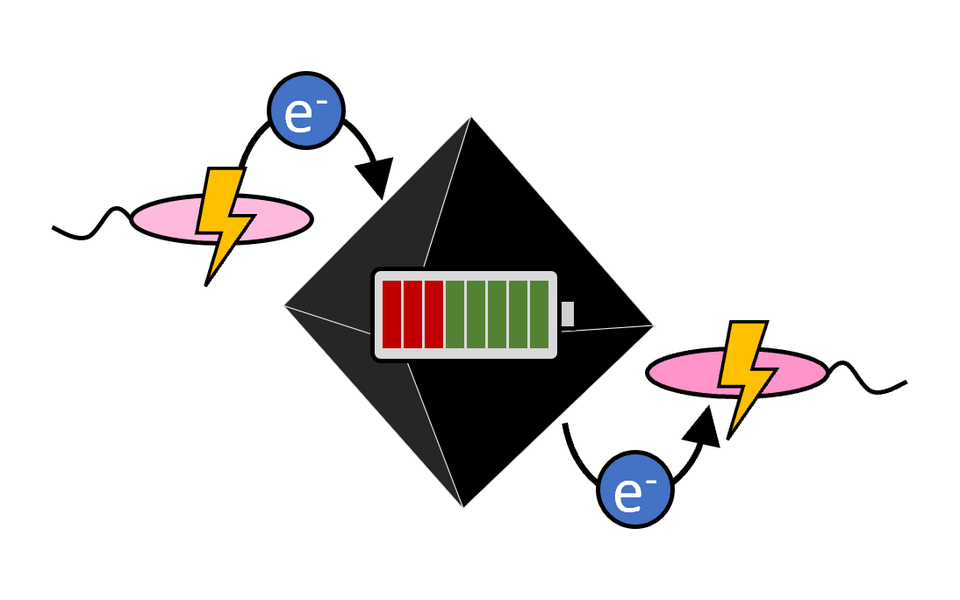
Some minerals can take up and give out electrons without their structure changing, a bit like a rechargeable battery. We call them biogeobatteries. They are mixed-valence minerals, which means they contain iron or other elements in more than one charge state. Examples include iron oxides, clays, sulphides and green rust. Our work aims to understand how microbes access these minerals.
Why it matters
These minerals are widespread underground and may drive significant transfers of energy. Understanding how microbes use them could unlock their potential for low-cost, low-power energy storage in remote places.
How we approach it
We grow iron-oxidising and iron-reducing bacteria together with minerals such as magnetite nanoparticles, so that the minerals are charged and discharged in repeated cycles. We follow how the iron in the minerals changes between Fe(II) and Fe(III), using techniques such as 57Fe Mössbauer spectroscopy, and look for changes in the minerals themselves.
Questions we are asking
- How many times can a mineral be charged and discharged by microbes before it changes into a different mineral?
- Which minerals hold the most charge, and how quickly can microbes reach it?
- Could biogeobatteries be harnessed for low-power energy storage, and what would limit them?