Analytical services and capabilities

57Fe Mössbauer, FTIR and UV-Vis spectroscopy for industry and academia, from Environmental Mineralogy, University of Bristol.

Overview

We offer 57Fe Mössbauer, FTIR and UV-Vis spectroscopy to industrial and academic partners. Our instruments are housed in the School of Earth Sciences at the University of Bristol. They are set up for iron-bearing samples, to determine iron oxidation state, identify mineral phases and follow reactions as they happen.

Mössbauer and FTIR projects are delivered with a full analysis, and the interpretation is developed in collaboration with you.
  • Industry
  • Academia

Instruments

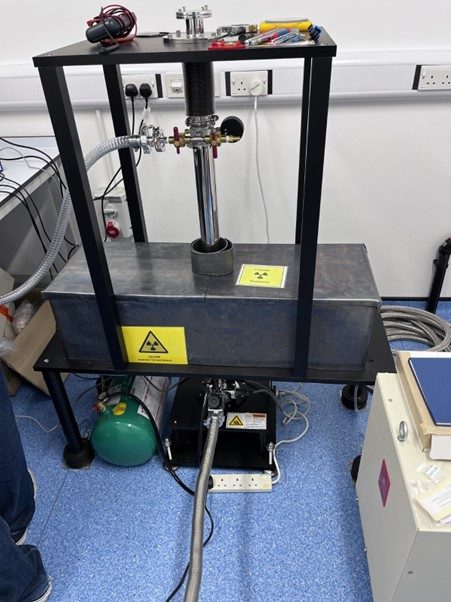
The Mössbauer spectrometer, with its cryostat mounted in a frame above the shielded sample enclosure

57Fe Mössbauer spectroscopy

57Fe Mössbauer spectrometer (Wissel) with cryostat (Janis)

Mössbauer spectroscopy is specific to iron and probes its local chemical environment directly. We use it to determine Fe(II) and Fe(III) proportions, identify iron mineral phases and quantify their relative abundances. Low-temperature measurements help to resolve magnetically ordered phases, including nanoparticulate and poorly crystalline iron (oxyhydr)oxides, which are often difficult to distinguish at room temperature.

Spectra can be fitted and interpreted with MinSight, our online platform for Mössbauer data analysis.

Temperature
4.2 to 295 K
Geometry
Transmission
Sample
50 to 100 mg of powder
Iron content
At least 5 to 10 wt% Fe
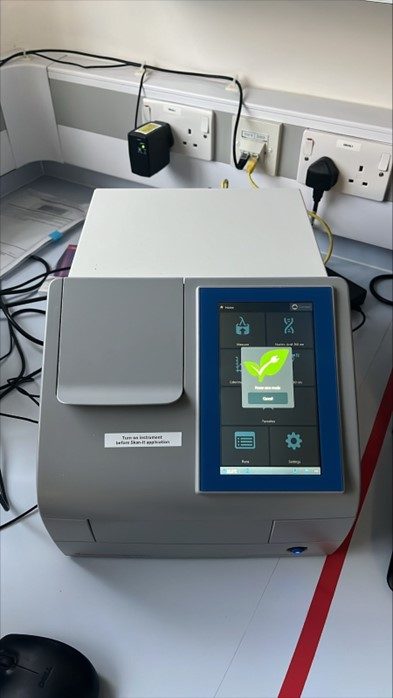
The Thermo Fisher UV-Vis spectrophotometer on a laboratory bench

UV-Vis spectrophotometry

UV-Vis spectrophotometer (Thermo Fisher)

The spectrophotometer accepts both 96-well plates and single cuvettes, supporting high-throughput analysis as well as individual measurements. Routine applications include quantifying Fe(II) and total iron, measuring the optical density of microbial cultures and determining a range of other analytes.

Formats
96-well plates and cuvettes
Routine assays
Fe(II), total Fe, optical density
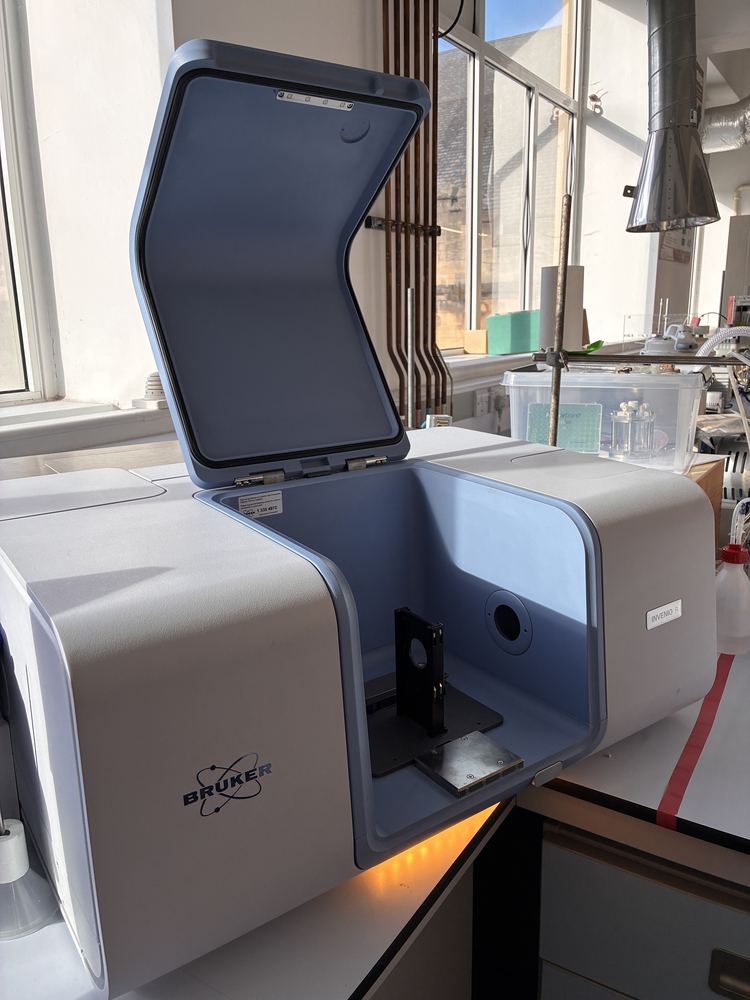
The Bruker Invenio FTIR spectrometer on a lab bench, with its sample compartment open

FTIR spectroscopy

FTIR spectrometer (Bruker Invenio)

Fourier-transform infrared (FTIR) spectroscopy identifies minerals and compounds from the vibrations of their chemical bonds. The attenuated total reflectance (ATR) cell allows in situ measurements, so we can follow reactions between solid precipitates and different reagents as they take place.

Accessory
ATR cell
Mode
In situ reaction monitoring

Further capabilities

Alongside these services, we bring the following expertise and equipment to research and collaborative projects.

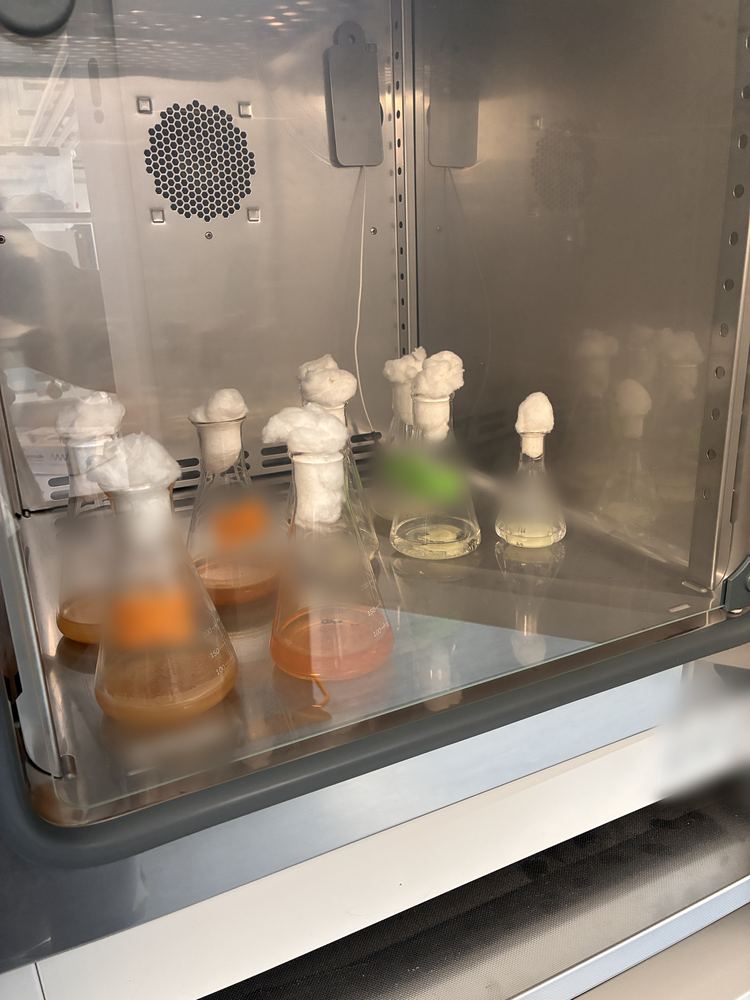
Flasks of orange and pale bacterial cultures with cotton wool stoppers inside an incubator

Microbial cultivation

Anoxic gloveboxes (Coy) and incubators

We culture both iron-reducing and iron-oxidising bacteria. Iron reducers include Geobacter sulfurreducens and Shewanella oneidensis. Iron oxidisers include phototrophic, microaerophilic and nitrate-reducing bacteria. We also grow acidophilic bacteria to leach metals from waste.

Anoxic work
Two gloveboxes (95% N₂, 5% H₂)
Incubation
Light and dark, up to 45 °C
Storage
−70 °C freezer
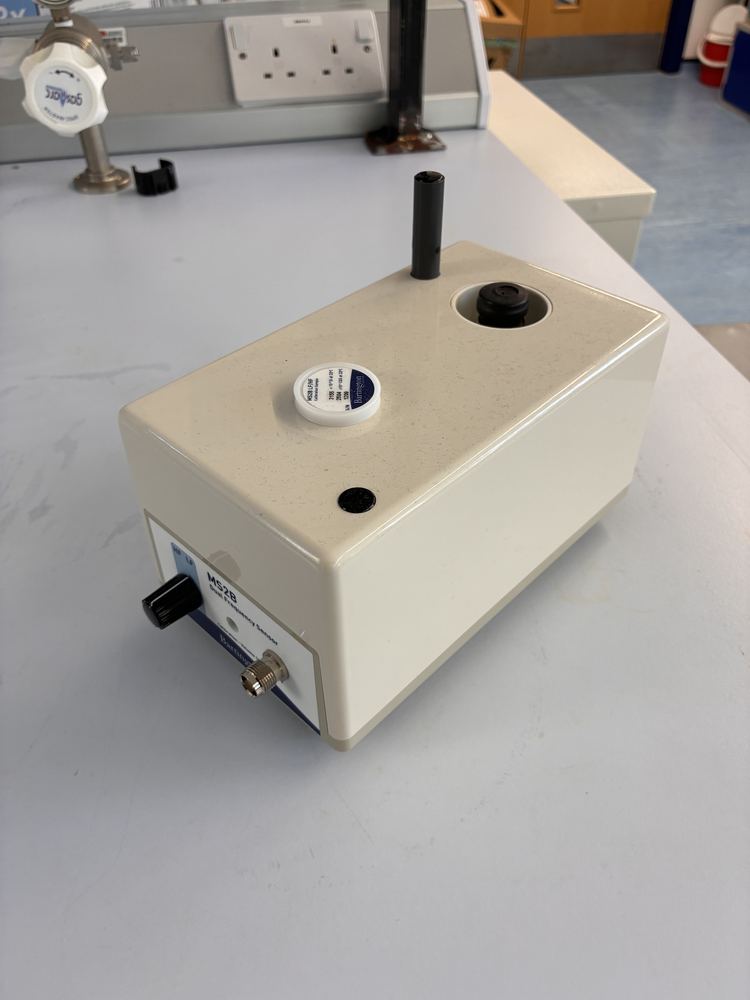
The Bartington dual-frequency magnetic susceptibility sensor on a lab bench

Magnetic susceptibility

Bartington MS3 meter with dual-frequency sensor

Magnetic susceptibility measures how strongly a sample can be magnetised, which reflects its content of magnetic minerals such as magnetite. Measuring at two frequencies shows the contribution of ultrafine (superparamagnetic) particles. We use it to track magnetic minerals in soils and sediments.

Frequencies
0.47 kHz and 4.7 kHz

Iron quantification

Ferrozine assay on the UV-Vis spectrophotometer

We routinely quantify Fe(II) and total iron in experimental and environmental samples using the ferrozine assay, calibrated against standards.

Species
Fe(II) and total Fe
Calibration
1 to 1000 µM

Synthesis of magnetic nanoparticles

Biogenic and chemical synthesis

We make magnetic nanoparticles (MNPs) by both biogenic and chemical synthesis pathways. Biogenic MNPs are produced by iron-reducing bacteria, which form magnetite as they grow. Chemically synthesised MNPs are made without microbes. Having both lets us compare particles made by microbes with those formed without them.

Pathways
Biogenic (microbial) and chemical

How a 57Fe Mössbauer project works

Most enquiries are for Mössbauer spectroscopy, so the steps below describe a typical Mössbauer project. FTIR projects follow a similar process, and we also deliver the analysis of the FTIR data.

  1. Get in touch

    Tell us about your samples and what you need to find out, so we can advise on the right technique.

  2. Prepare your samples

    For Mössbauer spectroscopy we typically need 50 to 100 mg of powdered sample containing at least 5 to 10 wt% Fe. Projects are normally limited to around 6 to 10 samples.

  3. Measurement and fitting

    We measure your samples at the temperatures agreed for the project and fit the spectra.

  4. Report

    You receive a full report with fitted spectra and interpretation, developed in collaboration with you.

Costs

Costs are available on request.

Work with us

We welcome enquiries from industry and academia, whether you need measurements on your samples or are planning a joint project. Get in touch to discuss your samples and what you need to find out.

Email james.byrne@bristol.ac.uk

These instruments are also listed on the School of Earth Sciences facilities page.